Nationwide Google Maps Prank: CDU Offices Become 'Eierhaus'
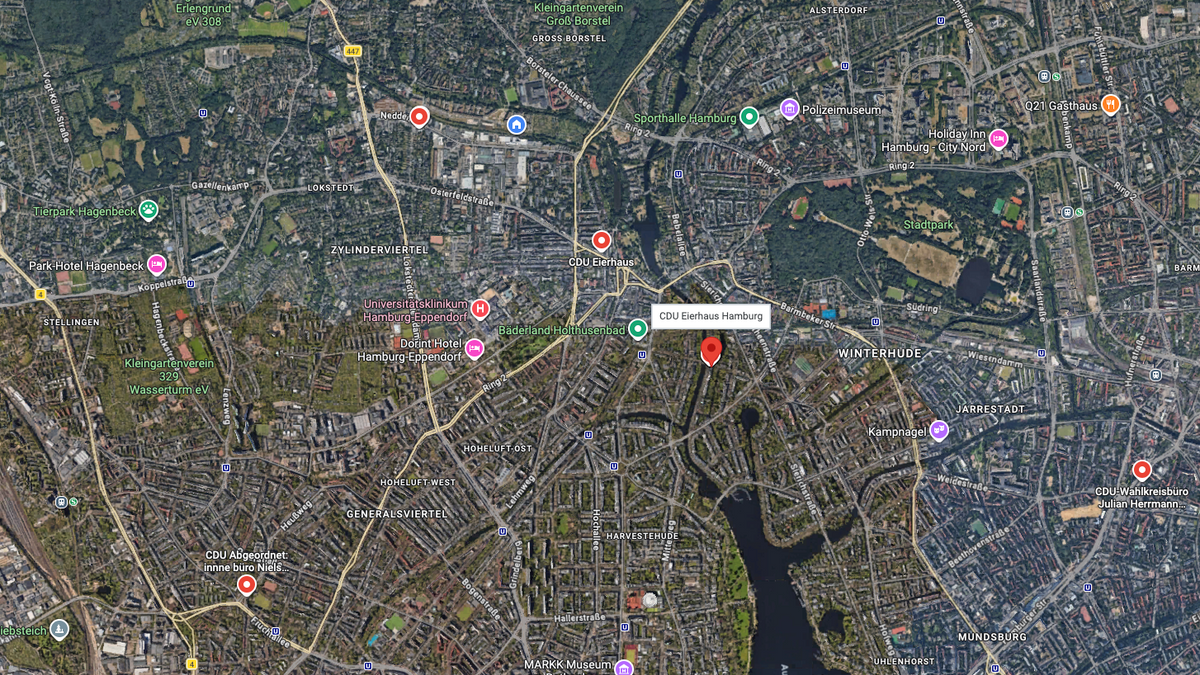
In a bizarre and widely discussed digital incident, numerous offices of Germany's Christian Democratic Union (CDU) and even some Christian Social Union (CSU) locations across the country have recently seen their names inexplicably altered on Google Maps. The new, rather peculiar designation? "Eierhaus" – German for "Egg House." This audacious and nationwide prank has left many scratching their heads, combining an element of juvenile humor with clear political undertones. The recent alteration of numerous
google maps cdu name listings to 'Eierhaus' has sparked a mix of bewilderment and amusement across Germany, raising questions about digital security, activism, and the integrity of online information.
The Unfolding of a Digital Prank: What Happened?
The "Eierhaus" phenomenon wasn't an isolated incident; it was a coordinated and widespread digital campaign. Users searching for CDU party offices, particularly in Brandenburg and Berlin, were confronted with the unexpected "Eierhaus" label. The prank appeared to be dynamic, with entries popping up, evolving, and then, in some cases, disappearing as Google's corrective measures took effect.
The extent of the prank was notable:
- Brandenburg Impact: The state headquarters in Potsdam, for instance, was listed as "CDU buntes Eierhaus – Landesverband Brandenburg" (CDU colorful Egg House – Brandenburg State Association). Other affected district associations included Barnim, Cottbus, Potsdam-Mittelmark (also a "buntes Eierhaus"), Oberspreewald-Lausitz, and CDU branches in Schwarzheide and Spremberg.
- Berlin Locations: Offices like the CDU district association in Berlin-Kreuzberg displayed "CDU Eierhaus Berlin-Kreuzberg." The CDU faction in the Treptow-Köpenick district assembly, the district association of Treptow-Köpenick, and the local association Neu-Tempelhof were also affected.
- Variations: Beyond "Eierhaus," one entry for the Märkisch-Oderland district association was notably altered to "CDU Schuldenfabrik Kreisverband Märkisch-Oderland" (CDU Debt Factory District Association Märkisch-Oderland), adding another layer of political commentary to the digital mischief.
These changes often appeared in the search results and pop-up windows associated with the locations, making them highly visible to anyone looking for CDU offices. The rapid appearance and subsequent disappearance of some of these altered names underscore the challenge platforms like Google face in policing user-generated content while maintaining up-to-date and accurate information. The incident highlights how a seemingly small alteration to a
google maps cdu name can gain significant traction and media attention.
Unmasking the Motive: Beyond a Simple Joke
While the initial reaction might be to dismiss the "Eierhaus" prank as mere childish tomfoolery, its widespread nature and specific political targeting suggest a more deliberate intent. The choice of "Eierhaus" itself, while seemingly nonsensical, appears to be a direct reference to a recent, controversial protest.
The leading theory connects the prank to student protests against the reintroduction of conscription in Germany. In early March, during a student demonstration in Berlin against conscription, an 18-year-old student carried a placard emblazoned with the phrase "Merz leck Eier" – a crude, insulting remark directed at Friedrich Merz, the federal chancellor and leader of the CDU. Police subsequently opened an investigation into the young man on suspicion of defamation.
This public incident provides a strong contextual link for the "Eierhaus" designation. "Eier" (eggs) in German slang can carry derogatory or vulgar connotations, making the term "Eierhaus" a thinly veiled insult or a mocking reference to the political leadership. This suggests the prank was a form of digital activism, allowing frustrated individuals to express dissent in a novel and attention-grabbing way, even if the methods are unorthodox.
To delve deeper into this potential connection and the intricate web of protest and digital response, explore our related piece:
CDU 'Eierhaus' on Google Maps: Connected to Anti-Conscription Protests? The sophisticated and coordinated nature of the changes to the
google maps cdu name listings indicates more than just random acts of vandalism.
The Digital Battleground: Google Maps and Reputation Management
Google, as the world's leading mapping service, prides itself on providing accurate and current information. However, its reliance on user-generated content and collaborative editing features also leaves it vulnerable to such malicious or mischievous alterations. Google confirmed that it strives to keep Google Maps as up-to-date as possible and displays correct information, encouraging users to report errors via the feedback button.
For political parties and businesses alike, a Google Maps listing is often the first point of contact for potential visitors or clients. An altered or misleading name, especially one with derogatory connotations like "Eierhaus" or "Schuldenfabrik," can significantly impact an organization's public image and even its daily operations. The CDU, while taking the prank "gelassen" (relaxed) according to Brandenburg's CDU General Secretary Julian Brüning, still had to dedicate resources to reporting and correcting these entries. Brüning emphasized the party's focus on "real challenges" over "digital jokes," yet the need for correction was immediate.
This incident serves as a stark reminder of the critical importance of proactive digital reputation management in the modern era. Organizations must not only monitor their social media presence but also diligently oversee their local business listings across various platforms. For a detailed look at the mechanics behind such digital mischief and the vulnerabilities of local listings, read:
Digital Mischief: How 'Eierhaus' Appeared on CDU Google Maps Listings.
Practical Takeaways for Businesses and Organizations
Regardless of your sector, the "Eierhaus" prank offers valuable lessons:
- Claim and Verify Listings: Ensure your Google My Business (GMB) profiles are claimed, verified, and regularly updated. This gives you more control over the information displayed.
- Monitor Regularly: Appoint someone to routinely check your GMB listings and other online directories for accuracy. Automated tools can also help detect changes.
- Respond Swiftly to Changes: If you spot incorrect information, use Google's "Suggest an edit" or "Report a problem" features immediately. The faster you act, the quicker erroneous data can be removed.
- Build Digital Resilience: Understand that online vandalism is a possibility. Having a clear protocol for addressing such issues can minimize damage and response time.
- Engage with Feedback: While malicious edits are rare, genuine user feedback can be invaluable. Engage constructively with comments and reviews to build trust.
The Broader Implications: Digital Activism and Freedom of Expression
The "Eierhaus" incident exists in a fascinating grey area between a harmless prank, a pointed political protest, and potential defamation. While the CDU leadership tried to downplay it, the police investigation into the "Merz leck Eier" placard highlights the fine line between free expression and legally actionable insults in Germany.
This form of digital activism showcases the power of collective, albeit anonymous, online action. It demonstrates how individuals can leverage widely used platforms like Google Maps to amplify a message, disrupt the status quo, and challenge established political entities. It forces a conversation about who controls digital public spaces and the responsibilities of platforms to maintain a balance between user freedom and informational integrity. The changing of a
google maps cdu name might seem minor, but its ripple effect can be surprisingly significant, sparking debate on digital ethics and protest methods.
The prank serves as a vivid example of how digital tools can be repurposed for unforeseen means, creating both headaches for organizations and intriguing case studies for observers of online culture.
Conclusion
The "Nationwide Google Maps Prank: CDU Offices Become 'Eierhaus'" has undeniably left its mark, not just on digital maps but on the public consciousness regarding digital security and political expression. What began as an anonymous act of digital mischief quickly escalated into a national talking point, forcing a prominent political party to address the bizarre renaming of its offices. From a "colorful Egg House" in Potsdam to a "Debt Factory" in Märkisch-Oderland, these alterations went beyond simple vandalism, echoing recent political protests and underlying societal frustrations. This incident underscores the ongoing challenge for tech giants like Google to balance user contributions with the critical need for accurate information, while also serving as a potent reminder for all organizations about the imperative of robust digital reputation management. The story of the altered
google maps cdu name listings is a compelling illustration of how the digital world can become a vibrant, often unpredictable, arena for both humor and pointed protest.